
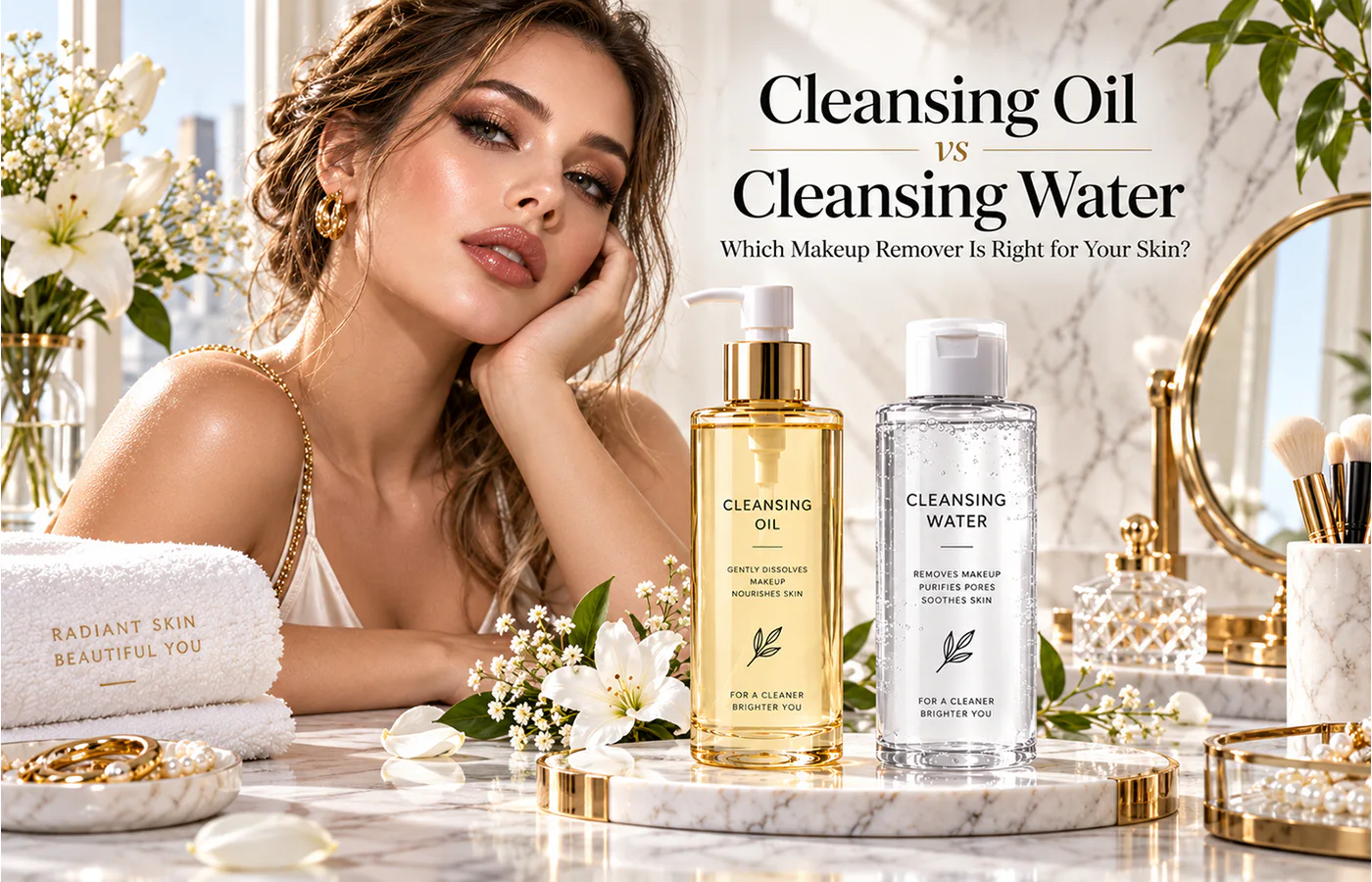
Removing makeup is more than simply washing the face. Sunscreen, foundation, mascara, long-wear makeup and daily oil-based impurities can behave very differently during cleansing, which is why beauty brands often develop more than one type of makeup remover.
Two of the most common options are micellar water and cleansing oil.Both are designed to help remove makeup and impurities, but they differ significantly in formula structure, texture, cleansing experience and the type of consumer they may appeal to.For skincare brands developing a private label cleansing range, understanding these differences can help determine which product concept fits the target market.
What Is Micellar Water?
Micellar water is typically a water-based cleansing product containing mild surfactants that organize into structures commonly described as micelles.These cleansing agents help lift oil, makeup and impurities from the skin so they can be removed with a cotton pad.Micellar water is usually associated with a light, fresh and convenient cleansing experience.
Depending on the formula, it may be positioned for:
gentle daily cleansing, light makeup removal, refreshing facial cleansing or sensitive-skin-oriented product lines.Because the base is predominantly water, micellar water generally feels much lighter than an oil cleanser.For consumers who prefer a quick cleansing step without an oily texture, this format can be particularly attractive.
What Is Cleansing Oil?
Cleansing oil is an oil-based makeup remover designed to interact efficiently with oil-soluble substances such as foundation, sunscreen, sebum and many types of long-wear makeup.A modern cleansing oil usually contains both oils or emollients and an emulsifying system.When water is added during cleansing, the product can emulsify into a milky texture, allowing the oil and dissolved makeup to rinse away more easily.
This makes cleansing oil especially useful when removing:
water-resistant sunscreen, foundation, heavy makeup, long-wear cosmetics and certain types of mascara.The sensory experience can also vary considerably.A cleansing oil does not necessarily need to feel thick or greasy. Modern formulations can be developed with a water-light, fast-spreading texture and a cleaner rinse-off feel.
Micellar Water vs Cleansing Oil: Key Differences
| Comparison | Micellar Water | Cleansing Oil |
|---|---|---|
| Main formula type | Primarily water-based | Primarily oil/emollient-based |
| Typical texture | Very light, watery | Fluid oil to lightweight oil |
| Application | Often used with cotton pads | Usually massaged directly onto dry skin |
| Best suited for | Light makeup and daily cleansing | Sunscreen, foundation and heavier makeup |
| Mascara removal | Depends strongly on formula and mascara type | Generally better suited to oil-soluble and long-wear makeup |
| Rinsing | Some formulas are positioned as no-rinse; others may be rinsed | Usually emulsified with water and rinsed |
| Consumer experience | Fresh, quick and lightweight | Massage-based, thorough cleansing experience |
| Formula positioning | Gentle cleansing, convenience | Makeup removal, deep cleansing, double cleansing |
Neither format is automatically “better.” The right choice depends on how the product will be positioned.
Which Is Better for Removing Mascara?
Mascara is one area where the difference between the two formats becomes more noticeable.A well-designed micellar water can remove everyday eye makeup, but performance depends on the surfactant system and the type of mascara being removed.Long-wear or water-resistant mascara may require stronger makeup-removing performance.Because cleansing oils have a stronger affinity for many oil-soluble makeup materials, they are commonly selected for products designed to remove foundation, sunscreen and more persistent eye makeup.For a brand developing a makeup-removing cleansing oil, formula performance can be adjusted through the choice of oils, emollients and emulsifiers.The goal is not simply to make the formula “oilier,” but to balance makeup removal with spreadability, emulsification and rinse-off feel.
Which Is Better for Sensitive Skin?
Both product types can be developed for sensitive-skin-oriented positioning.The answer depends more on the complete formulation than on whether the product is called micellar water or cleansing oil.
For micellar water, brands may focus on:
a mild surfactant system, fragrance-free concepts and soothing or moisturizing ingredients.For cleansing oil, formulation development may focus on:
a lightweight oil blend, efficient emulsification, minimal residue and suitable fragrance-free options.Consumers with sensitive skin may also be affected by how the product is used.For example, micellar water is commonly applied with cotton pads, meaning repeated rubbing can become part of the cleansing experience.Cleansing oil is normally massaged with the hands and rinsed with water.This difference in use method can be relevant when developing the final product concept.
What About Oily Skin?
It may seem counterintuitive to use cleansing oil on oily skin, but cleansing oils and facial sebum are not the same thing.An emulsifying cleansing oil is designed to dissolve makeup and oily residue and then rinse away after contact with water.However, the finished sensory profile matters.A product designed for oily or combination skin may benefit from:
a lighter oil phase, faster spreading, efficient emulsification and a less heavy after-feel.Micellar water is also popular with oily-skin consumers because of its light texture and convenient application.For brands, this means both product types can target oily or combination skin, but the formula and marketing positioning should be developed accordingly.
Can Micellar Water and Cleansing Oil Be Used Together?
Yes, but they do not always need to be used in the same routine.A consumer wearing heavier makeup may use cleansing oil as the primary makeup-removal step, followed by a water-based facial cleanser.This is commonly referred to as double cleansing.Micellar water can also function as a separate makeup-removal or refreshing cleansing step depending on the routine.For beauty brands, the two products can therefore complement each other within a larger cleansing collection rather than competing directly.
For example:
Micellar Water
→ lightweight daily makeup removal
Cleansing Oil
→ sunscreen and more persistent makeup removal
Gel or Foam Cleanser
→ subsequent facial cleansing
This creates a more complete cleansing product line.
Which Product Should a Private Label Beauty Brand Choose?
For brands developing a new makeup-removal product, the decision should begin with the target consumer and usage scenario.
Micellar water may be more suitable when the concept emphasizes:convenience, lightweight texture, quick daily cleansing and gentle positioning.Cleansing oil may be more suitable when the concept emphasizes:
mascara removal, sunscreen removal, long-wear makeup cleansing, massage-based cleansing or a premium double-cleansing routine.Brands can also differentiate products through texture.For example, a traditional rich cleansing oil and a modern water-light botanical cleansing oil can provide very different consumer experiences even though both belong to the same general category.
Packaging also affects positioning.
Micellar water commonly uses bottles with dispensing caps or pumps, while cleansing oils often use pump bottles designed for convenient dosage and direct application.
Developing Private Label Micellar Water and Cleansing Oil
Danlan Beauty provides OEM/ODM and private label manufacturing support for facial cleansing and makeup-removal products.
Depending on the brand concept, customization may include formula structure, cleansing performance, texture, botanical ingredients, fragrance, skin feel, packaging and private label artwork.
For a private label micellar water, development may focus on a lightweight water-based cleansing system and a fresh skin feel.
For a private label cleansing oil, development can focus on oil selection, emulsification performance, mascara and sunscreen removal, rinse-off feel and lightweight sensory characteristics.
The final formula should be developed according to the target consumer, target market, packaging and intended product claims.
Final Takeaway
Micellar water and cleansing oil both remove makeup, but they do so through different formulation approaches.Micellar water is generally lighter, water-based and convenient for everyday cleansing and lighter makeup.
Cleansing oil is oil-based and often better suited to sunscreen, foundation, mascara and more persistent makeup.For beauty brands, the better choice depends on the desired consumer experience rather than simply choosing one format over the other.A well-designed cleansing range may even include both products, allowing consumers to choose the cleansing method that best suits their makeup routine and skin-care preferences.
Looking to develop your own makeup remover? Danlan Beauty supports custom micellar water, botanical cleansing oil and facial cleanser OEM/ODM projects with formula, packaging and private label customization.