
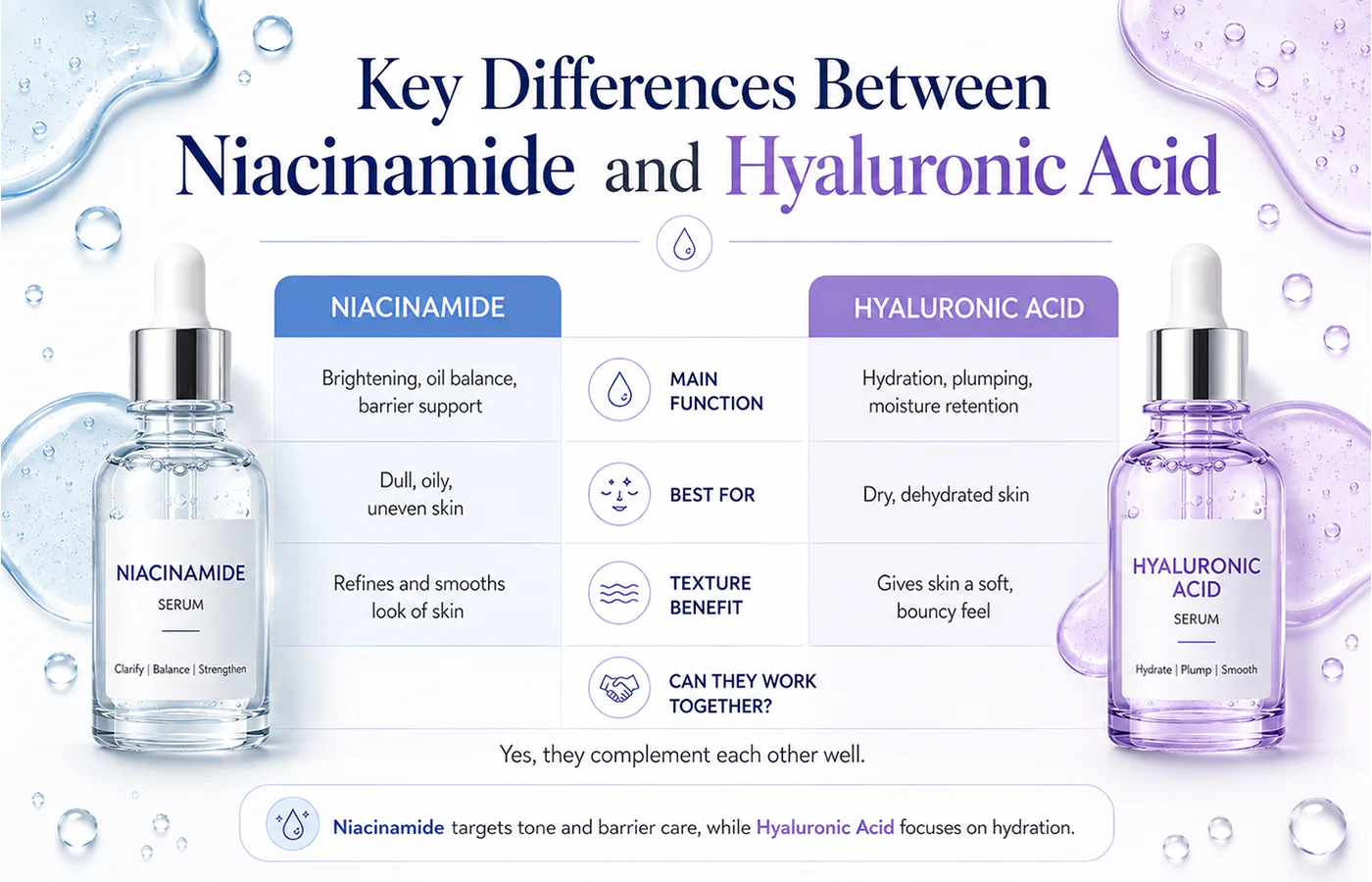
Niacinamide and hyaluronic acid are two of the most popular skincare ingredients used in modern serums, creams, lotions, and other skincare products. Although both ingredients are known for supporting healthier-looking skin, they work in very different ways.
So, which one is better for your skin
The answer depends on your skin concerns. Hyaluronic acid mainly focuses on hydration and moisture retention, while niacinamide offers broader benefits such as brightening, oil control, barrier support, and improving uneven skin tone.
The good news is that niacinamide and hyaluronic acid can usually be used together, making them a highly complementary skincare combination.
What Is Hyaluronic Acid?
Hyaluronic acid, also known as HA, is a naturally occurring glycosaminoglycan found in the human body. It plays an important role in retaining moisture and is naturally present in the skin, joints, connective tissues, and the vitreous body of the eyes.
One of the most important characteristics of hyaluronic acid is its strong ability to bind and retain water, which is why it has become such a widely used moisturizing ingredient in skincare formulations.
Where Does Hyaluronic Acid Come From?
Traditionally, hyaluronic acid could be extracted from animal tissues such as rooster combs and other biological materials.
Today, however, most cosmetic-grade hyaluronic acid is produced through microbial fermentation. This method is more suitable for large-scale commercial production and is widely used by modern cosmetic manufacturers.
What Is Niacinamide?
Niacinamide is the amide form of niacin, also known as vitamin B3. It is a water-soluble vitamin derivative that plays an important role in cellular metabolism and many biological processes.
In skincare products, niacinamide is commonly used to help improve uneven skin tone, support the skin barrier, regulate excess oil, and improve the overall appearance of the skin.
Vitamin B3 can naturally be found in many foods, including meat, fish, eggs, dairy products, nuts, whole grains, mushrooms, and green vegetables.
Main Benefits of Hyaluronic Acid
1. Provides Intense Hydration
Hyaluronic acid is best known for its excellent moisturizing properties.
It attracts and retains water, helping the skin feel softer, smoother, and more hydrated. This makes it particularly suitable for dry, dehydrated, or tight-feeling skin.
2. Helps Maintain Plump-Looking Skin
By helping the skin retain moisture, hyaluronic acid can temporarily improve the appearance of dryness-related fine lines and make the skin look fuller and more supple.
3. Supports the Skin Barrier
Keeping the skin properly hydrated helps support normal barrier function and can reduce dryness and discomfort caused by moisture loss.
Different Molecular Weights of Hyaluronic Acid
One important factor in cosmetic formulation is the molecular weight of hyaluronic acid.
Different molecular sizes behave differently on the skin.
High-molecular-weight hyaluronic acid mainly remains on the surface of the skin, where it can form a moisture-retaining film and help reduce water loss.
Lower-molecular-weight hyaluronic acid can interact more closely with the outer layers of the skin and is often used to provide a different moisturizing feel.
For this reason, cosmetic formulators often combine different molecular weights of hyaluronic acid within the same formula.
This multi-molecular-weight approach can provide both immediate surface hydration and longer-lasting moisture retention.
Main Benefits of Niacinamide
1. Helps Improve Uneven Skin Tone
Niacinamide is widely used in brightening skincare products because it can help reduce the appearance of uneven pigmentation and dullness.
With consistent use, it may help make the complexion look brighter and more even.
2. Supports the Skin Barrier
Niacinamide can help support the production of important skin lipids, including ceramides.
This can strengthen the skin barrier and improve the skin's ability to retain moisture.
3. Helps Control Excess Oil
Niacinamide is commonly used in products designed for oily and combination skin.
It may help regulate excess sebum production and improve the appearance of enlarged pores over time.
4. Helps Improve the Appearance of Fine Lines
Niacinamide also supports normal cellular functions and can help improve the overall appearance and texture of aging skin.
What Percentage of Niacinamide Is Best?
The ideal concentration depends on the formulation and the user's skin tolerance.
Products containing around 2% niacinamide may already provide useful barrier-supporting and moisturizing benefits.
Concentrations between approximately 3% and 5% are commonly used in brightening and skin-conditioning formulations.
Higher concentrations are also available, but stronger does not automatically mean better.
Some people, particularly those with sensitive skin, may experience redness, dryness, or irritation when using high-concentration niacinamide products.
For many skincare users, moderate concentrations can provide a good balance between effectiveness and skin tolerance.
Can Niacinamide and Hyaluronic Acid Be Used Together?
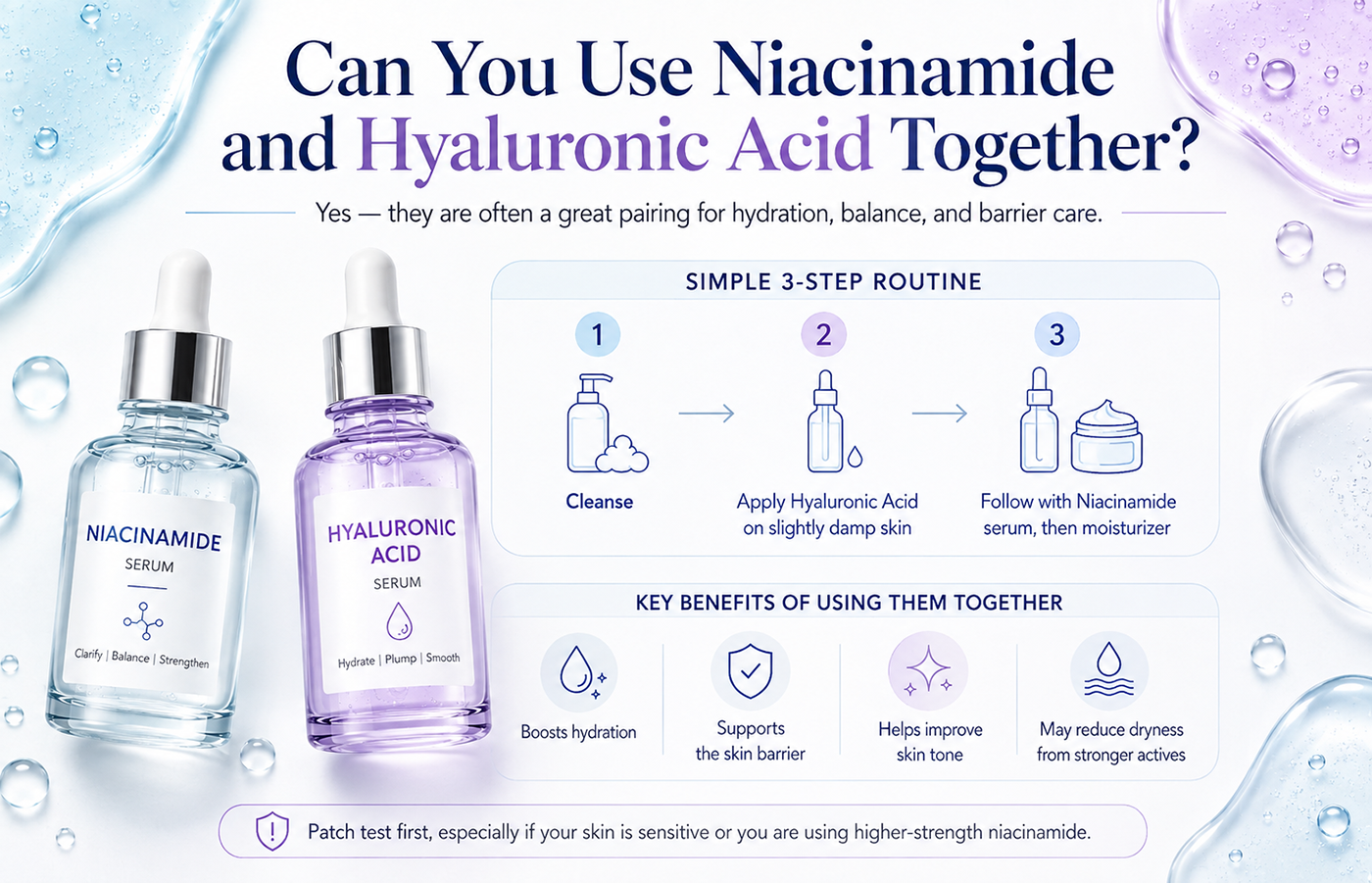
Yes.
Niacinamide and hyaluronic acid are generally compatible and are frequently used together in skincare routines and cosmetic formulations.
The two ingredients perform different functions.
Hyaluronic acid focuses primarily on hydration.
Niacinamide focuses more on barrier support, oil balance, skin tone, and overall skin conditioning.
When combined, hyaluronic acid can help keep the skin hydrated while niacinamide supports the skin barrier and improves the appearance of uneven or oily skin.
This combination may be especially suitable for people who want both hydration and brightening benefits.
Which Should You Apply First?
A simple routine could be:
- Cleanse the skin.
- Apply a hyaluronic acid serum to slightly damp skin.
- Apply a niacinamide serum.
- Finish with moisturizer.
- During the daytime, apply sunscreen.
However, product texture is also important.
As a general rule, skincare products are usually layered from thinner textures to thicker textures.
Niacinamide vs Hyaluronic Acid: Which One Should You Choose?
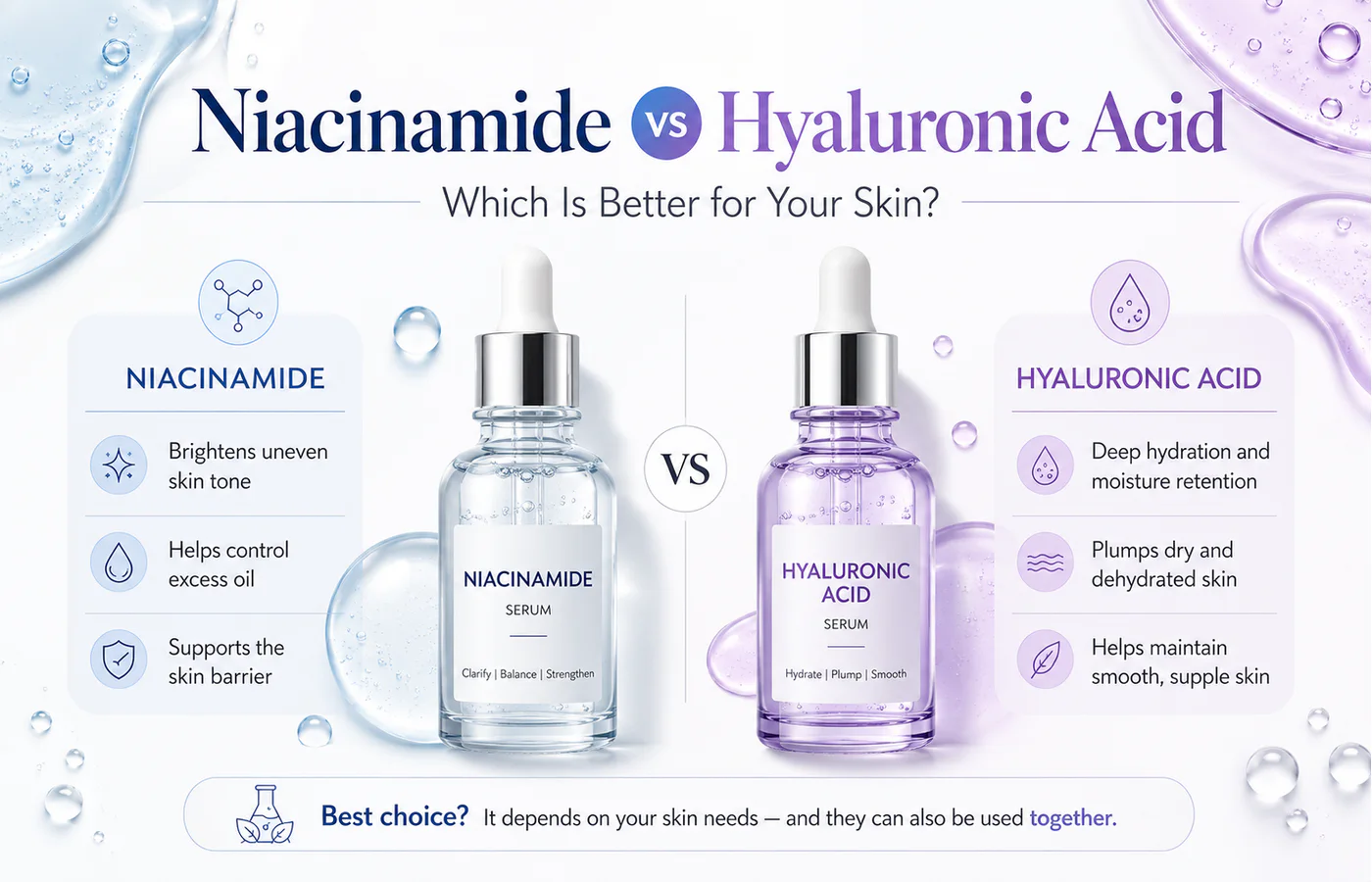
If your main concern is:
Dryness or dehydration:
Hyaluronic acid may be the better choice.
Uneven skin tone or dullness:
Niacinamide may be more suitable.
Excess oil or visible pores:
Niacinamide may be more useful.
Weak or compromised skin barrier:
Niacinamide can help support barrier function, while hyaluronic acid provides additional hydration.
Dry skin with uneven tone:
Using both ingredients together may provide better overall results.
Ultimately, niacinamide and hyaluronic acid should not necessarily be viewed as competitors.
They perform different functions and often work very well together.
A Formulator's Perspective
From a cosmetic formulation perspective, hyaluronic acid is particularly interesting because different molecular weights can be combined within one formula.
A combination of different molecular sizes can help create a more balanced moisturizing system, providing both surface hydration and improved moisture retention.
Niacinamide is also one of the most widely used functional ingredients in modern skincare products.
Its versatility makes it suitable for serums, creams, lotions, masks, toners, and many other product formats.
When the concentration, pH, and overall formulation system are properly designed, both ingredients can be incorporated into effective skincare products.
Final Thoughts
Hyaluronic acid and niacinamide are both valuable skincare ingredients, but they address different skin needs.
Hyaluronic acid primarily helps hydrate and maintain moisture, while niacinamide offers benefits related to skin tone, oil balance, barrier support, and overall skin condition.
For many people, the best answer is not choosing one over the other, but using them together.
As with any active skincare product, individual skin tolerance varies. When trying a new product—especially one containing higher levels of niacinamide—it is a good idea to perform a patch test first and gradually introduce the product into your skincare routine.