
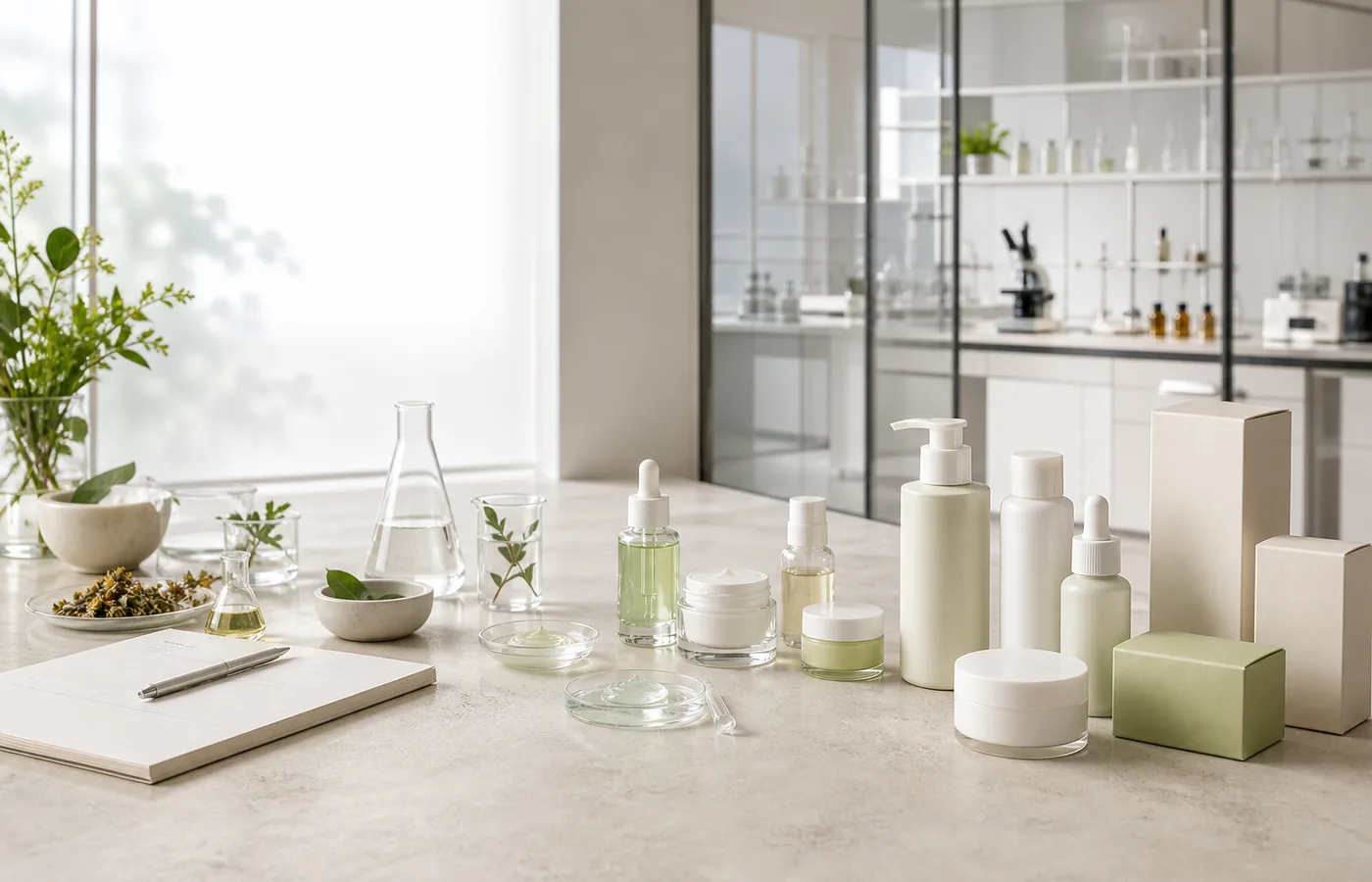
Starting a private label skincare brand is more accessible than building a factory or formulation laboratory, but it is not as simple as placing a logo on a jar. A successful launch requires a clear target customer, a focused product range, realistic minimum order quantities, compliant claims, suitable packaging, and a manufacturer that can turn the brief into repeatable production.
Private label manufacturing allows a brand to use an existing formula, modify a proven formula, or develop a more customised product with an experienced manufacturing partner. The right route depends on budget, launch date, product differentiation, destination market, and the level of technical control the brand wants to retain.
This guide explains how to start a private label skincare brand in ten practical steps, from market positioning and formula selection to compliance, production, and reordering.
1. Define a Specific Target Customer
Do not begin with a long list of products. Begin with one group of customers and one clear problem or routine.
Useful questions include:
• Who will buy the product?
• In which country and sales channel will it be sold?
• What skin concern or routine does the range address?
• What price will the customer reasonably pay?
• Which competing products will buyers compare it with?
• Why should the customer choose this brand?
“Skincare for everyone” is difficult to position. A more focused brief might target lightweight hydration for humid climates, simple barrier-support routines, fragrance-free daily care, or travel-friendly products for online shoppers.
Your target customer influences formula texture, claims, packaging size, language, price, and channel. Make these decisions before requesting samples.
2. Choose a Focused Launch Range
New brands often try to launch too many SKUs. Every additional product adds formula decisions, packaging components, artwork, testing, inventory, and marketing work.
A focused launch might include:
• Cleanser + toner + moisturiser
• Cleanser + serum + cream
• Serum + eye cream + face cream
• Body wash + body lotion
• Shampoo + conditioner + hair mask
One strong hero product can also be a valid starting point. It allows the brand to concentrate its budget on better packaging, photography, testing, and customer acquisition.
Browse Danlan's private label skincare product concepts to compare practical starting categories.
3. Decide Between Stock, Modified, and Custom Formulas
Private label skincare can be developed at several levels.
Existing formula
The manufacturer already has a tested formula platform. This is generally the fastest and most economical route. Customisation may be limited to packaging, fragrance, colour, or selected details.
Modified formula
The brand begins with an existing base and requests controlled changes, such as texture, fragrance, viscosity, or selected ingredients. Changes may require additional stability, compatibility, safety, or performance work.
Custom formula
The formula is developed to a detailed brand brief. This offers greater differentiation but normally requires more time, samples, testing, technical decisions, and budget.
Do not assume that adding a popular ingredient automatically improves a formula. Ingredient level, compatibility, preservation, stability, sensory effect, packaging, and claim support must be evaluated together.
4. Prepare a Manufacturer-Ready Product Brief
A clear brief helps the manufacturer recommend a realistic route and issue a useful quotation.
Include:
• Target country or region
• Target customer and product positioning
• Product type and intended use
• Desired texture, absorption, finish, colour, and fragrance
• Preferred and restricted ingredients
• Claims or benefits you want to explore
• Target retail price and target manufacturing cost
• Packaging style, size, and decoration
• Estimated first order and annual volume
• Required launch date
• Reference products, with an explanation of what you like about them
Avoid sending only a competitor link and asking for “the same product.” Explain whether the reference is for texture, packaging, fragrance, positioning, or performance. The manufacturer may need to develop an original, legally compliant alternative.
5. Screen Private Label Skincare Manufacturers
A supplier should be evaluated on manufacturing capability, not only presentation quality or price.
Check:
• Cosmetics production licence and approved production scope
• Legal company name and factory address
• Quality-management system and relevant GMP or ISO 22716 certification
• R&D laboratory and sample process
• Experience with the required product format
• Raw-material and batch traceability
• Packaging and testing support
• Export experience for the destination market
• Communication, quotation detail, and project management
Ask whether the company is the licensed manufacturer or a trading company. Either model can provide value, but the actual factory, responsibilities, and commercial structure should be transparent.
For a detailed supplier-screening process, read How to Choose a Cosmetics Manufacturer in China.
6. Calculate the Real Launch Budget
The manufacturing price is only one part of the budget. Plan for:
• Formula development or modification
• Product samples and courier charges
• Stability, compatibility, microbiological, and performance tests
• Bottles, jars, pumps, caps, labels, cartons, and inserts
• Moulds, printing plates, and decoration setup
• Regulatory assessment and notification
• Product photography and content
• Freight, duties, warehousing, and fulfilment
• Marketplace or retailer fees
• Marketing and customer acquisition
• Reorder cash flow and safety stock
Ask for separate MOQs for bulk formula, filling, bottles, pumps, cartons, and printed materials. Packaging suppliers may require more units than the finished-product order. Confirm who owns and stores unused components.
A first order should be large enough to achieve workable unit economics but small enough to test demand without creating excessive inventory risk.
7. Develop and Approve Samples Properly
Sampling should be controlled rather than informal. Record every sample code and revision.
Evaluate:
• Appearance and colour
• Odour or fragrance
• Texture and spreadability
• Absorption and after-feel
• pH and viscosity where relevant
• Dispensing and fill compatibility
• Performance against the agreed brief
Collect feedback in one document. Separate essential technical changes from personal preferences. Repeatedly changing fragrance, colour, active ingredients, and packaging at the same time can make the project slow and difficult to validate.
Final approval should identify the formula code, sample version, packaging components, product specification, and artwork. Keep an approved reference sample where practical.
8. Plan Testing and Regulatory Compliance Early
Compliance depends on the product, claims, ingredients, packaging, and target market. Do not leave it until after mass production.
For the United States, the FDA explains that manufacturers and processors subject to MoCRA must register facilities and renew registration every two years, while the responsible person must list marketed cosmetic products and update listings annually; certain exemptions apply. Registration and listing are not product approval. See the FDA's official cosmetic facility registration and product listing guidance.
For the European Union, cosmetic products require an EU-based Responsible Person, a safety assessment and Cosmetic Product Safety Report, a Product Information File, and notification through the Cosmetic Products Notification Portal before market placement. The European Commission provides official information on the Cosmetic Products Notification Portal and EU cosmetics legislation.
Responsibilities should be defined between the manufacturer, brand owner, importer, distributor, regulatory consultant, and responsible person. Ask which documents the factory will provide and which tasks require a qualified third party.
Claims also need evidence. “Moisturising,” “reduces the appearance of fine lines,” “dermatologically tested,” and similar statements require appropriate substantiation and careful wording. Avoid medical or therapeutic claims unless the product is developed and regulated for the relevant legal category.
9. Select Packaging for Performance, Not Appearance Alone
Packaging must protect and dispense the formula throughout its intended shelf life.
Consider:
• Formula compatibility with the bottle, jar, liner, pump, and gasket
• Air and light exposure
• Dose consistency and ease of use
• Leakage during transport
• Decoration durability
• Label space and required information
• Recyclability and local disposal systems
• Component MOQ and reorder lead time
Airless pumps can be useful for some formulas, but they are not automatically the best choice for every viscosity or budget. Jars can provide a premium experience, while tubes may offer simpler transport and dispensing. Test the actual formula in the selected packaging.
Use standard components for speed and lower risk. Custom moulds can create stronger visual differentiation but add tooling cost, development time, and higher minimums.
10. Approve Production and Build a Reorder System
Before mass production, confirm:
• Final quotation and payment terms
• Formula and specification
• Approved sample
• Packaging bill of materials
• Artwork and print proofs
• Batch-code format
• Testing plan and acceptance criteria
• Production and inspection schedule
• Shipping documents and Incoterms
• Complaint and non-conformity procedure
After production, review batch documents, inspection results, retained-sample arrangements, and shipment details. Keep a record of customer feedback, returns, packaging issues, and sales velocity.
Reorder planning should begin before inventory reaches a critical level. Packaging and raw-material lead times may be longer than the filling schedule. Share sales forecasts with the manufacturer and confirm which components require advance booking.
A Realistic Private Label Skincare Timeline
Every project is different, but the development route normally includes:
• Brand strategy and product brief
• Supplier screening and quotation
• Formula selection or development
• Sample revision and approval
• Packaging sourcing and compatibility review
• Testing and regulatory preparation
• Artwork approval and component production
• Bulk manufacturing, filling, and packing
• Quality release and shipment
• Launch review and reorder planning
An existing formula with available packaging can move faster than a new formula with custom components. Request a milestone-based schedule rather than relying on one general lead-time estimate.
Common Private Label Skincare Mistakes
Launching too many products
More SKUs divide attention and cash. Begin with a focused routine or hero product and expand using real sales data.
Choosing a supplier only by price
A lower quote may exclude tests, setup, excess packaging, documentation, or quality controls. Compare the full scope.
Copying claims without evidence
Competitor wording is not proof. Claims must match your product, evidence, and destination-market rules.
Approving packaging before formula compatibility
A visually attractive component can leak, block, discolour, or interact with the formula. Test the final combination.
Failing to define formula ownership
Confirm whether the formula is exclusive, manufacturer-owned, brand-owned, or available to multiple clients.
Treating the first order as the end of development
The launch generates useful information. Review consumer feedback, returns, repeat purchases, and production performance before expanding the range.
Frequently Asked Questions
How much does it cost to start a private label skincare brand?
The cost depends on formula route, testing, packaging, MOQ, decoration, compliance, freight, and marketing. Ask for an itemised project budget instead of using only the unit price.
Can I start with one skincare product?
Yes. A focused hero product can simplify inventory, messaging, compliance, and customer acquisition. Select a product with a clear role in the target customer's routine.
Do I need a custom formula?
Not always. A proven formula can support a faster market test. Custom development is more suitable when specific performance, sensory, ingredient, or positioning goals justify the additional investment.
How do I protect my skincare brand idea?
Use confidentiality terms, register relevant trademarks, define formula and artwork ownership, restrict unauthorised use of brand assets, and keep written specifications and approvals.
Can a Chinese manufacturer help with US or EU compliance?
An experienced manufacturer can provide formula, ingredient, testing, manufacturing, and batch information. Legal responsibilities may still sit with the brand, importer, distributor, or designated responsible person. Confirm responsibilities in writing and use qualified regulatory support where required.
Start Your Private Label Skincare Project With Danlan
Guangdong Danlan International Biotechnology Co., Ltd. supports private label skincare projects from formula selection and sampling to packaging, production, quality control, and export coordination.
Tell us your target market, customer profile, product category, expected order quantity, packaging direction, and planned launch date. We will review the brief and recommend a practical starting route.
Contact Danlan to discuss your private label skincare brand.